ULASAN PEMBACAAN: PENYELIDIKAN TERKINI TENTANG PERIBADI ANAK SULUNG DAN ANAK TUNGGAL
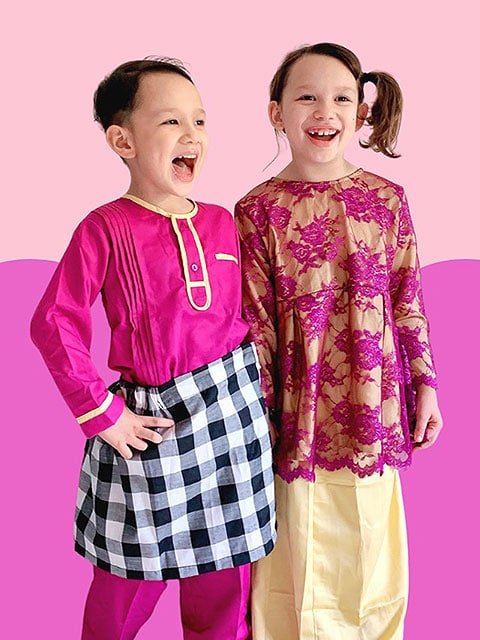 |
| Pakaian Tradisi Melayu untuk kanak-kanak |
Teori tanggapan urutan kelahiran telah mendapat tempat dalam dunia psikologi moden sehinggakan ia termasuk dalam perkara penting dalam subjek psikologi. Baru-baru ini telah dilakukan penyelidikan dengan lebih mendalam tentang pengertian susunan kelahiran dan watak-watak yang mempengaruhi kanak-kanak mengikut urutan kelahiran. Banyak penyelidikan telah dilakukan dan dijalankan untuk meneroka bagaimana ciri-ciri khusus berkait dengan susunan kelahiran. Hasilnya, kajian sejauh mana didikan semasa lahir oleh Adler mempengaruhi keperibadian seseorang, terutamanya anak pertama dan anak seterusnya.
Penyelidikan daripada kajian Holmgren, Molander, & Nilsson (2007) menggunakan ujian ingatan dan pengecaman untuk menunjukkan bahawa susunan kelahiran boleh menjejaskan prestasi ingatan episod sepanjang jangka hayat. Adik-beradik yang lain tidak beraksi sebaik adik-beradik sulung. Jadi, keputusan menunjukkan kesan yang ketara untuk ingatan dan pengiktirafan, menunjukkan susunan kelahiran yang lebih rendah dikaitkan dengan prestasi ingatan yang lebih baik. Prestasi ingatan terjejas dengan susunan kelahiran menaik. Selain itu, peserta yang dilahirkan pertama dan peserta yang dilahirkan kedua atau ketiga menunjukkan prestasi yang lebih baik daripada peserta yang dilahirkan sebagai anak keempat atau lebih baru. Untuk pengiktirafan, keputusan menunjukkan hanya sedikit kesan ketara dari susunan kelahiran.
Menurut kajian , kanak-kanak tunggal lebih cerah dan mencapai pencapaian akademik yang lebih tinggi daripada adik-beradik. Hanya dilahirkan mendapat markah lebih tinggi dalam ujian IQ dan berprestasi akademik yang lebih baik daripada orang yang membesar dengan ramai adik-beradik atau dengan abang, menurut analisis 115 penyelidikan yang membandingkan intelek orang dengan dan tanpa adik-beradik. Hanya anak sulung dan orang yang mempunyai hanya seorang adik beradik sahaja mengatasi anak-anak sahaja dari segi IQ dan pencapaian akademik. (Toni Falbo: September, 1986). Ini menunjukkan bahawa hanya yang dilahirkan mendapat perhatian yang lebih untuk mereka membesar dengan lebih berjaya.
Hanya sindrom kanak-kanak, menurut banyak ahli psikologi, kemungkinan besar adalah fantasi. Adalah penting untuk diingat bahawa ketika ramai orang masih tinggal di kawasan luar bandar. Akibatnya, hanya kanak-kanak menjadi lebih terpencil, mungkin kerana mereka tidak mempunyai orang lain untuk bercakap. Faktor perwatakan termasuk kelakuan antisosial, kemahiran sosial yang lemah dan mementingkan diri berkemungkinan telah dipengaruhi oleh pengasingan ini. Hanya kanak-kanak dalam budaya bandar dan pinggir bandar hari ini mempunyai beberapa peluang untuk bergaul dengan kanak-kanak lain, hampir sejak lahir di taman asuhan, taman dan taman permainan, sekolah dan aktiviti kokurikulum. (Valencia Higuera, Okt 2019)
Hasil yang menyokong hasil penyelidikan dan ramalan Adler ialah kebanyakan kanak-kanak pertama akan mempunyai IQ yang lebih tinggi daripada kanak-kanak lain. Ini boleh membuat hujah untuk menyokong ramalan Adler. Adler berkata dalam anak sulung, sekurang-kurangnya untuk sementara waktu, berada dalam kedudukan yang bertuah. Biasanya, ibu bapa sangat gembira selepas kelahiran anak pertama mereka dan melaburkan sejumlah besar masa dan perhatian kepada bayi yang baru lahir. Lazimnya, anak sulung mendapat penjagaan segera dan lengkap ibu bapa mereka. Akibatnya, anak sulung mempunyai kehidupan yang menggembirakan dan selamat.
Tambahan pula, untuk anak tunggal ahli psikologi yang lain mendapati bahawa kanak-kanak bujang mempunyai kecenderungan yang lebih cerah dalam pencapaian akademik. Ini tidak dapat dibuktikan dalam Adler kerana bertentangan dengan pemikiran Adler. Adler berfikir apabila anak sahaja mendapati bahawa mereka tidak menjadi tumpuan dalam bidang kehidupan di luar keluarga, seperti sekolah, mereka cenderung untuk menghadapi masalah. Kanak-kanak adalah satu-satunya yang tidak belajar untuk berkongsi mahupun bersaing. Mereka cenderung untuk kecewa jika bakat mereka tidak mendapat penghormatan dan perhatian yang mencukupi.
Akhir sekali, kita boleh merumuskan bahawa penyelidikan terkini tertentu tentang anak sulung dan anak tunggal mungkin menyokong ramalan Adler dan sesetengah penyelidik mungkin tidak menemui ideologi baharu atau agak berbeza. Bagi anak sulung, boleh dikatakan merekalah yang paling bertanggungjawab antara adik-beradik dan banyak barang yang perlu digalas. Manakala bagi anak tunggal pula, boleh kita katakan mereka akan lebih kreatif dan lebih menyesuaikan diri bersama orang yang lebih tua daripadanya dan ia meningkatkan lagi ilmu dan kematangannya untuk berfikir. Kerana mereka adalah satu-satunya anak dalam keluarga, mereka menerima banyak perhatian dan sokongan daripada ibu bapa mereka.
MY POINT OF VIEW ABOUT RECENT RESEARCH ON THE PERSONALITY OF FIRST-BORN
AND ONLY-BORN CHILDREN.
Birth order notion theory has gained a place in the world of modern psychology so much so that it is included in the essentials of the subject of psychology. Now it has been recently research in more depth about the notion of birth order and the characters that influence the child following the sequence of birth. Many researches have been done and carried out to explore how specific traits correlate to birth order. As a result, a study of the extent to which upbringing at birth by Adler affects a person’s personality, especially first children and next children.
I start from the first born, from the recent research they discovered a correlation between first birth order and intelligence. Research found that firstborn children outperform their younger siblings on cognitive tests since from infancy they are better set up for academic and intellectual success from the type of parenting they experience. Jee-Yeon K. Lehmann, co-author of the research and an economist at the Analysis Group in Boston said with the next child, parents will be more likely to be more relaxed than what they consider unimportant to their children. Therefore, the eldest child gets more high treatment than the parents because it is the first experience in having a family. Firstborns tend to get the most mental stimulation, since they are receiving the undivided attention from both parents and all that first-time anxiety.
The research from
Holmgren, Molander, & Nilsson (2007) study used tests of recall and
recognition to show that birth order may affects episodic memory performance
throughout the life span. Other next born siblings did not perform as well as
firstborn siblings. So, the results showed significant effects for both recall
and recognition, indicating lower birth order is associated with better memory
performance. Recall performance impaired with ascending birth order. Other than
that, First born participants and participants born second or third performed
superior to participants born as fourth child or later. For recognition the
results showed only marginally significant effects of birth order.
Furthermore, only
children never lose their family's position of primacy and authority; they are
the focus and center of attention. Only children develop early and exhibit
adult actions and attitudes because they spend more time with adults than
youngsters with siblings. When only children discover that they are not the
focus of attention in areas of life outside the family, such as school, they
are prone to have issues. Children are the only ones who have learnt neither to
share nor to compete. They are inclined to be frustrated if their talents do
not garner adequate respect and attention.
According to
certain research, lone children are brighter and achieve greater academic
accomplishment than siblings. Only born scored higher on IQ tests and performed
better academically than persons growing up with many siblings or with an older
brother, according to an analysis of 115 research comparing the intellect of
people with and without siblings. Only first-born and persons with only one
younger sibling outperformed only children in terms of IQ and academic
accomplishment. (Toni Falbo: September, 1986). This shows that only born get
more attention for them to grow up more successfully.
Only child
syndrome, according to many psychologists, is most likely a fantasy. It's
important to remember that when many people still lived-in rural regions. As a
result, only children became more isolated, maybe because they had no one else
to talk to. Character factors including antisocial conduct, poor social skills,
and selfishness are likely to have been influenced by this isolation. Only
children in today's cities and suburbs culture have several opportunities to
mingle with other children, almost from birth at daycare, parks and
playgrounds, school, and extracurricular activities. (Valencia
Higuera, Oct 2019)
As results that support the results of the Adler research and prediction
is that most first children will have a higher IQ than other children. This
could make an argument in support of Adler’s prediction. Adler said in First-born
children, at least for a while, are in a fortunate position. Typically, parents
are overjoyed after the birth of their first child and invest a significant
amount of time and attention to the newborn. Typically, first-born children
receive their parents' immediate and complete care. As a result, first-born
have a joyful, secure existence.
Furthermore, for the only child the other psychologist found that single
children had a brighter propensity in academic achievement. This cannot be
evidenced in Adler's because opposite with Adler thought. Adler thought when
only child discover that they are not the focus of attention in areas of life
outside the family, such as school, they are prone to have issues. Children are
the only ones who have learnt neither to share nor to compete. They are inclined
to be frustrated if their talents do not garner adequate respect and attention.
Finally, we can summarize that certain recent researches about first-born children and only-child might support Adler’s prediction and some researchers might not perhaps they found the new ideology or a bit different. For the first-born child, we can say that they are the most responsible among the siblings and have a lot of things to carry. While, for the only-born child, we can say that they will be more creative and more adapting along with people older than him and it further enhances his knowledge and maturity to think. Because they are the only kid in the family, they receive a lot of attention and support from their parents.
Reference- Lehmann, J.-Y. K., Nuevo-Chiquero, A., & Vidal-Fernandez, M. (2016). The early origins of birth order differences in children's outcomes and parental behavior (Analysis Group, Inc. Working Paper No. 2016-23). Retrieved from Analysis Group website.
- Holmgren, S., Molander, B., & Nilsson, L.-G. (2007). Episodic memory in adult age and effects of sibship size and birth order: Longitudinal data. Journal of Adult Development, 14(1-2), 37–46.
- Falbo, T., & Polit, D. F. (1986). Quantitative review of the only child literature: Research evidence and theory development. Psychological Bulletin, 100(2), 176–189.
- Valencia Higuera (October 23, 2019). Only Child Syndrome: Proven Reality or Long-Standing Myth?.

Tiada ulasan:
Catat Ulasan